Showing posts with label science. Show all posts

Monday, April 4, 2022

Creative Ways to Get Kids Reading

This post could also be called 

"How to Be The Coolest Reading Teacher Ever!"

Use a child's strengths in other subject areas! Interdisciplinary lessons are the most engaging and effective for all students. Most of these involve books and printables, but if you're looking for something different, see the bottom of the post - and / or leave a message. I just may have another post coming!


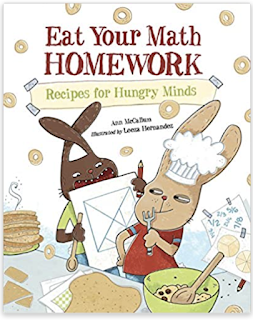
Read recipes and cook. This has an added bonus of teaching math and science at the same time! Read menus and restaurant reviews.


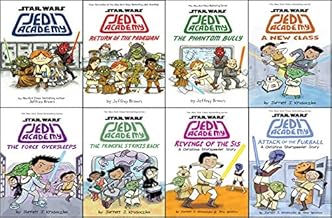
Read comics. Here are some of our favorites: 


Read mysteries. It's easier to pay attention to details when you call them clues. Drawing conclusions is way more fun when you're solving a crime!

Learn globally. Read about people all over the world.


Skip parts of the book! There are many books where you get to choose what happens next. Here is an awesome review as well as plot analysis of this type of literature.


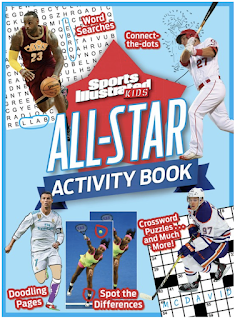
Read sports recaps and magazines. Create charts and graphs that show statistics. Discuss patterns you've noticed and predict what will happen next. 


Read diaries. 

  • Dear America - historical fiction stories written from the point-of-view of young girls throughout American history
  • The Royal Diaries - historical fiction written from the point-of-view of young girls throughout world history and based on real people
  • My Name is America - historical fiction stories written from the point-of-view of young boys throughout American history


Read signs. Take pictures of them and write stories that include them in the plot. 


Download this page as a PDF here.

Tuesday, November 2, 2021

Learning about Frog Life Cycles with A Frog in the Bog

 Learning about Frog Life Cycles with A Frog in the Bog by Karma Wilson


We are big Karma Wilson book fans over here. We love the repetition and rhyme as well as the pictures. This one was great because we were able to tie in learning about biomes and life cycles in science while reading as well as practice our number words.

See the read aloud here.


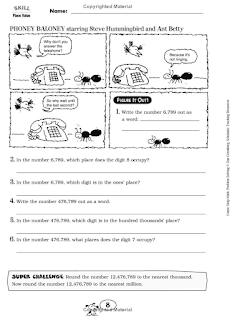
Here are some printables I created for us to work with.


We also watched some videos about the tadpole's life cycle into a frog and learned about where frogs live.

Trials of a Tadpole video


I found a song called The Frog in the Bog. It's a little tricky for preschoolers, but it's fun when a puppet is included. 

Read another post about Karma Wilson books here.

Read more animal life cycle posts here.


Thursday, October 14, 2021

Fourteen Monkeys: A Rainforest Rhyme

Do you have students who are interested in monkeys or the rainforest? Did you come across this post while looking for research resources? We came across the book Fourteen Monkeys: A Rainforest Rhyme because it had a number word in its title and my son was interested since we had just visited Rainforest Cafe, where we got a book called Night, Night Jungle. Visit Manu National Park in Peru, a rainforest about the size of New Jersey, where 14 species of monkeys live, through this book.

I wouldn't exactly consider this one a good read aloud story, or even a very good story for preschoolers, simply because it contains a lot of information...UNLESS you only read the short bolded sentence for each set of pages. 

I would, however, recommend it to my fourth graders when we focus on non-fiction text features. I'm happy to have both options for my more curious readers who may want to pick up the book after I've introduced it and read the shorter version.

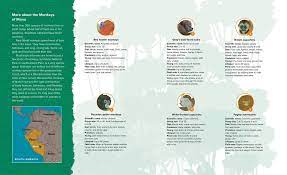
It's also great for organizing information and taking notes. I created a Google Doc to do this, and you can snag it for free to use for practice. Just complete together as a class, in small groups, or as individuals. It has a bookmarked table of contents for easy navigation as well as answer keys. Remember to make two copies - one for yourself with answer keys and the other to share with students.


Click the image or here to make a free copy of the Google Doc.

I strongly suggest visiting Manu National Park in Peru via Google Earth. The pictures in the book are beautiful, but it's important to actually locate its place in space. At first you'll notice a blurry green screen. Ask your student(s) why! It's the rainforest canopy!


For a challenge, students can create their own games or worksheets, such as:
  • true/false statements
  • Bingo boards
  • board games
  • word searches
  • crossword puzzles
  • Venn diagrams
Want to incorporate math? (included in the Google Docs)
  • Graph number of babies
  • Graph lifespan

Get artsy! Make these 3D monkeys and create your own rainforest diorama!

Want to learn about another biome? Check out this post about the  Blue Ridge Mountains

Interested in more science projects and posts? Look no further.

Searching for more number books or counting books?


Sunday, October 10, 2021

Blue Ridge Babies 1, 2, 3: A (Non-babyish) Counting Book


My son and I were perusing the library shelves after story time and we came across a book titled Blue Ridge Babies 1, 2, 3. It had a cute cover and we have been working on addition, subtracting, and counting as well as reading number words, so I decided to look it over. Seeing the cute pictures and words were written in word form meant it went into our large check out pile. When I got it home, it was so much more than a book to read with my preschooler! 


Buy the Book  or watch the  Video


For those of you homeschooling, or teaching PreK-3, this book has so much to offer, including a song! I made a printable activity that I did with my son, and here is what we covered.


Click the images above or here to download.

If I was using this with my fourth grade class, we would locate the Blue Ridge on Google Earth. I'd ask, "Where else might a biome like this be found in America? Where might it be found in the rest of the world?" Then we would make our own books for other biomes.

Snag a free book template by clicking the image below or here. It's editable, so you can share a copy on Google Classroom, via email, or even adapt and print a copy for students to write and draw on.


Learn more about the writing, illustrating, and publishing process this book went through here:

 https://kathytemean.wordpress.com/2021/04/22/book-giveaway-blue-ridge-babies-1-2-3-a-counting-book-by-laura-sperry-gardner/

Thursday, September 23, 2021

Crinkle, Crinkle, Little Star Activities

 After a recent trip to Liberty Science Center, we left the gift shop with a NASA shirt that says "I Need My Space" for my son and two books - one called This Little Scientist and another called Crinkle, Crinkle, Little Star. He is super into science and my daughters are loving touch and feel books, so they were big hits.


The latter is a rhyming book that extends the well-known song "Twinkle, Twinkle, Little Star" by adding information about some constellations and their stories. We also have this one, which is somewhat satisfying for the girls when they fight over the crinkle one.

We watched this short video about constellations:

before seeing One World, One Sky: Big Bird's Adventure in the IMAX theater.


We printed a constellation connect the dots page, which was a big hit! 

Lastly, we came across a StoryBots video about Outer Space.

I cannot wait to see my son's reaction when he gets The Moon in My Room for his birthday. He, like most kids, has been fascinated by the moon since he could look outside. Before he was even two years old, he could point out the moon during the day and tell you when he saw a full moon or crescent.

Now you may not have a child or student in preschool or even lower elementary, but there are tons of great resources out there to get kids interested in astronomy. Here are a few:

NASA Kids Club has lots of fun space activities to do!

National Geographic Kids has an easy to use section of their site just for learning about space.


NASA Space Place is for slightly older kids.


The European Space Agency website is also geared towards grades 1-5.

Last, but not least is Time for Kids, your go-to place for current space events.


Can't get enough science? Read on:


Read other astronomy posts here: 


Book shopping? Check out more posts that include books here:


Tuesday, May 26, 2020

Earthquake Resistant Resort Building STEM Project

This collaborative Google Slides project includes 55 slides hyperlinked to a table of contents for easy navigation. 


It includes slides for: task / video explanation, research resources, procedure / design process, materials list, a suggested timeline, presentation explanation, rubric, student planning guides and reflection, and awards. 


Depending on age, this project can take from several periods to up to two weeks. The recommended time frame is 4-5 periods.

The task: Can you design a resort building that will resist an earthquake? Students will work through the engineering design process while communicating effectively. There are 6 different award slides to emphasize the important parts of the project.


Monday, May 25, 2020

Really Cool Rollercoasters

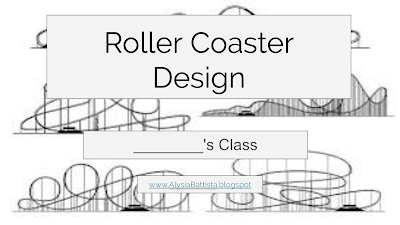
Are you in search of a great STEM project to do at home or in class? This roller coaster design project is so much fun. It can take several hours or days depending on how you structure it. Check out a few of the 45 slides included.

This collaborative STEM project can be planned in person or virtually and be built in person. It's perfect for a modified remote learning situation, block schedule, or typical science / STEM class and can be shared via Google Apps or Google Classroom. Videos, research links, task directions, planning guides, rubric, and editable awards are included in the 45 editable slides.


Students are to design the safest, tallest, coolest looking roller coaster in the world. If your design is the best, it will be built at a local amusement park. They practice the steps of the engineering process as they research, plan and build, test, and retest their designs.


The best part is you can keep track of students' work both in class and from home. You can also comment and edit as needed, including by adding awards for the most creative, tallest structure, best collaboration, best use of materials, most sturdy, and best redesign.

Kids not only love this project, but they also learn to work together and to follow the steps of the engineering design process through a real life application!

Want to try some virtual interactives? These are great for learning about potential and kinetic engergy.


Did you miss out on a trip to Disney or an amusement park? Here are sone virtual roller coaster rides!


Check out more STEM / science posts:


Monday, May 4, 2020

May the 4th Be With You

Here are some May the 4th writing prompts to use with students. 

Image may contain: 1 person, possible text that says '"Your eyes can deceive you. Don't trust them." Obi- -Wan Kenobi What is one thing you have read that is unbelievable? www.AlvsiaBattista.blogspot.com'


Image may contain: one or more people and text

We also did a Star Wars escape room via Zoom. We used knowledge of temperatures and energy sources to pick a planet to manufacture on, used what we knew about prefixes and shapes, deciphered a code, solved equations, used map skills, and worked together to complete the mission. Here is the mission, should you choose to accept it:


Make a copy of the Google Slides presentation or access it here.

If you've got Star Wars lovers in your class or family, check out these popular Jedi Academy books:
Jedi Academy Books Series 1-8